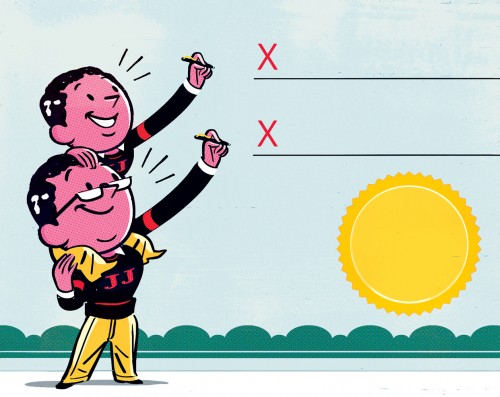


Gifts Your Children Will Never Forget

family-on-a-beach-“You give but little when you give of your possessions. It is when you give of yourself that you truly give.” -Kahlil Gibran

We all have countless holiday memories. Most of them center around our faith in Jesus Christ and his birth, family, and traditions.

Very few childhood memories actually include the gifts we received. So what type of gifts can we give to our children that they will never forget? What gifts will truly impact their lives and change them forever?

To that end, here is a list of gifts your children will never forget. Read more
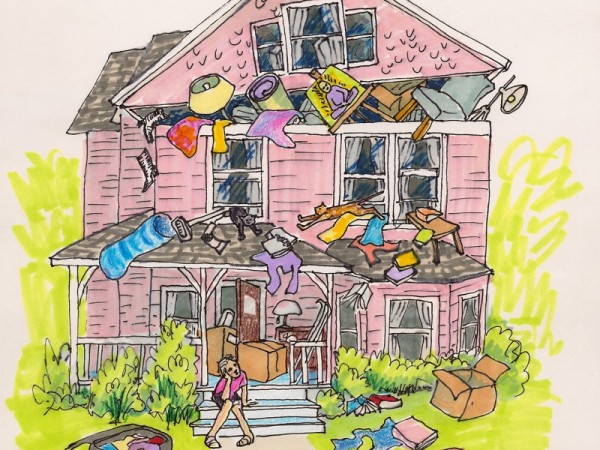
How Much Stuff We Actually Own

Most of us know we own too much stuff. We feel the weight and burden of our clutter. We tire of cleaning and managing and organizing. Our toy rooms are messy, our drawers don’t close, and our closets are filled from top to bottom. The evidence of clutter is all around us.

Today, increasing data is being collected about our homes, our shopping habits, and our spending. The research is confirming our observation: we own too much stuff. And it is robbing us of life. All the emotional, visual and mental clutter in our homes steal time and energy and keeps us from doing what is really important and rewarding…being anxiously engaged in good causes!

Here are 21 surprising statistics about our clutter that help us understand how big of a problem our accumulation has actually become. Read more

Moving Can Be Tough on Kids


Relocating your family can be exciting, but also stressful for you and your kids.

Deciding to move to a new house is a big upheaval for the entire family. But while adults tend to focus on the practical problems, a child will focus on all the losses that the move causes. This can be the loss of their friends or of a safe and familiar environment. One of the many beauties of the LDS Church is you will have a built-in new ward family that will welcome you with open arms any where you go in the world. But there will still be the stress of moving and relocating for everyone.

The degree of stress in moving is often underestimated by all concerned. Research shows that moving is one of the greatest stresses we face in our lives. In its capacity to cause psychological distress it comes only after losing a close relative in terms of severity, and ahead of illness, loss of employment and divorce.

Of course planned and managed well, distress is not necessarily the outcome. Use these pointers to ease your family’s transition so your kids more quickly feel at home. Read more

Lofty Prices Denting Home Sales

Economists and real-estate agents are finding out that younger and middle-income buyers getting squeezed out.


Sales of existing homes fell in October after a September surge, as rising home prices and a lack of inventory challenged potential buyers. Meanwhile, more children are living with their parents than during the 2007-09 recession, an indicator that young adults aren’t striking out on their own despite substantial improvement in the economy.

The pace of existing-home sales fell 3.4% in October from September to a seasonally adjusted annualized rate of 5.36 million, the National Association of Realtors said Monday. Read more

Parents Helping with Jumbo Loans

 Getting Mom and Dad to co-sign a jumbo mortgage is a tough sell all around.

The practice is rare, but a few lenders will allow parents to help their adult children qualify for jumbo mortgages, which exceed conforming-loan limits of $417,000 in most places and $625,500 in high-price areas such as San Francisco. A typical scenario: a first-time home buyer whose salary has a strong upward trajectory but who hasn’t been on the job long enough to meet income requirements to buy property in a pricey locale, such as New York, says Ray Rodriguez, regional mortgage sales manager for Cherry Hill, N.J.-based TD Bank, which lends in 15 East Coast states.

Read more

Divorce and the Shared Mortgage

American_Gothic_
Deciding what to do with the house can be a major quandary for couples getting a divorce, particularly when they share a mortgage.

At LDSAgents.com, a qualified mortgage professional can work with you during the settlement process and can help identify many of the hurdles.

Cynthia Thompson, the founder of Divorce Planning Solutions, a financial planning firm in White Plains, N.Y., says ideally, this preparation should happen early on in the divorce process . Too often, Ms. Thompson said, people are “arguing, litigating, fighting, having no idea of the whole picture.”

When there is equity in the home, each spouse typically wants to take a share as part of the settlement agreement. But if one person wants to remain in the home, rather than sell it and split any profit, then that spouse will likely have to qualify for a mortgage on his or her own. Read more

How to Enjoy a Long Winter

houses_in_snow-890302
Residents of Norway view their long dark winters as something to celebrate. It is possible to be cheerful for the next four months.

As the days get darker and colder in much of the northern hemisphere, it’s easy to indulge in gloom. For the next few months, you’ll be shivering. You’ll be battling foul weather. Thanks to daylight saving time there will be no chance to see the sun after work.

The gloom leads to a common question: What can I do to cope with the dark and cold?

If you truly want to be happy during winter, though, this is the wrong approach to the season. Changing your mindset can do more than distracting yourself from the weather. Read more

Your Brain on Retirement

Retiring at 55 and spending the rest of your life relaxing on the front porch may sound appealing, but if you want your brain to keep working, it’s probably not a good idea. Mounting evidence shows that staying in the workforce into old age is good not only for our bank accounts, but also for our health and mental acuity. With LDS people living 8-11 years longer than the average person there is more to consider when planning your retirement.

As medical advances extend the length of the human lifespan – and the number of healthy, active years – scientists, economists and policymakers are delving into the question of what the optimial time to stop working is.

One message is becoming clear: don’t stop too soon.

Read more

The Growing Need For the Bank of Mom & Dad

M&DThe Bank of Mom and Dad is increasingly open for business – and is increasingly necessary – for younger homebuyers looking to secure a down payment, particularly for middle-income households, presumed first-time homebuyers, Hispanics and Asians.

Not only do parents need to consider the cost of a mission and college these days but there is the potential cost of helping their children get into a home. The use of loans and gifts from family and friends to help purchase a home increased sharply during the recession – from 8 percent of homes bought in 2007 to 21 percent of homes bought in 2009. The share has since declined, to 13 percent in 2014. Hispanics and Asians are more likely to receive down payment assistance from family and friends than blacks and whites. Presumed first-time homebuyers who bought in the years after the recession were roughly twice as likely to have received down payment assistance from friends and family as those who bought prior to the recession. Read more

Housing Demand to Surge Over the Next Decade

housing-demandKnowing who will lead the demand will guide agents where to focus their business efforts in the future.

We all know the population will grow and age in the future. The Mortgage Bankers Association (MBA) believes that between 13.9 and 15.9 million additional households will be formed by 2024, making the next decade one of the strongest in US housing history.

At the upper end, this results in a growth rate of 1.6 million households per year. Boosted by the aging of the population, the aggregate homeownership rate will rebound to between 65 and 66%.

In their new research paper, Housing Demand: Demographics and the Numbers Behind the Coming Multi-Million Increase in Households, the MBA’s researchers conclude that the housing demand surge will be driven by Hispanics, Baby Boomers, and Millennials. Read more